Why Do Businesses Need Tailgating Detection Systems?

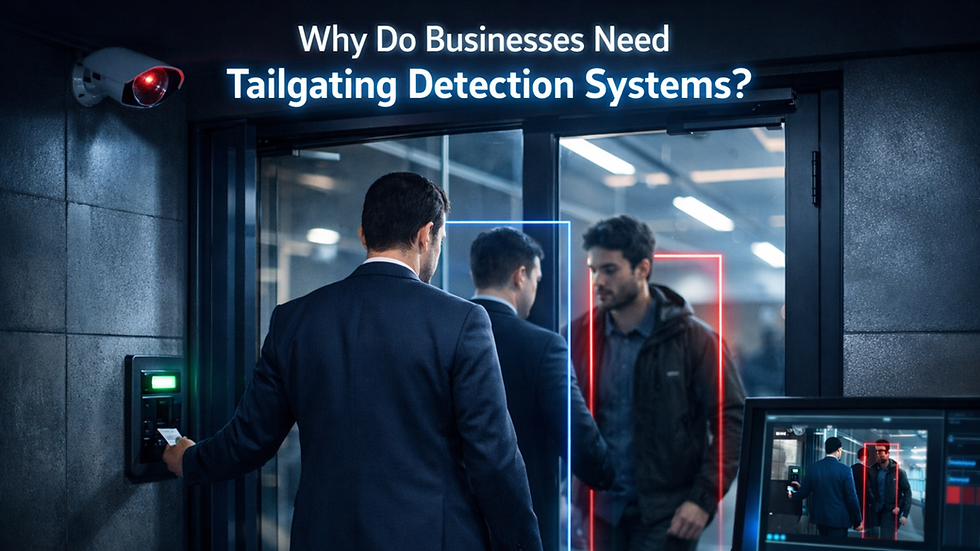
What if someone enters your facility without proper authorization simply by following an employee through a secured door? This common security gap, known as tailgating, can expose businesses to serious risks.
Tailgating prevention systems detect when multiple individuals attempt to enter a restricted area using a single access credential. They use sensors, cameras, and AI to monitor entry points, trigger alerts, and ensure only authorized individuals gain access.
What Is Tailgating Detection?
Tailgating detection is a security solution designed to identify and prevent unauthorized individuals from entering restricted areas by following authorized personnel. It is commonly used in offices, data centers, and high-security facilities.
How It Works:
Monitors entry points using cameras or sensors
Detects multiple people entering with a single access event
Triggers alerts or denies access in real time
This ensures that access control systems are not bypassed.
Why Is Tailgating a Serious Security Risk?
Tailgating may seem minor, but it can lead to major consequences.
Potential Risks:
Unauthorized access to sensitive data or assets
Increased chances of theft or sabotage
Compliance violations and legal issues
Threats to employee safety
Even a single incident can compromise an entire security system.
How Do Tailgating Detection Systems Work?
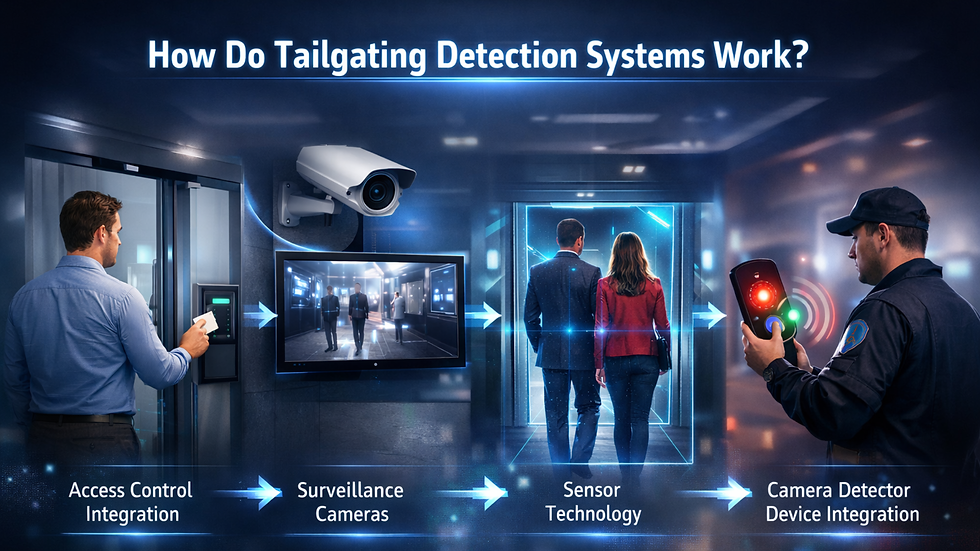
Modern systems combine hardware and intelligent software to monitor entry points effectively.
Key Components:
1. Access Control Integration
Works with existing systems like keycards or biometric scanners.
2. Surveillance Cameras
Captures real-time footage to monitor entry behavior.
3. Sensor Technology
Detects the number of individuals passing through a door.
4. Camera Detector Device Integration
A camera detector device can enhance system accuracy by identifying hidden or unauthorized surveillance equipment, adding an extra layer of security.
What Are the Benefits for Businesses?
Implementing these systems offers multiple advantages.
Key Benefits:
Prevents unauthorized entry
Enhances overall security posture
Protects sensitive data and assets
Improves compliance with security regulations
Builds a safer workplace environment
These benefits make it a critical investment for modern businesses.
Where Are Tailgating Detection Systems Used?

These systems are widely adopted across industries.
Common Use Cases:
Corporate offices
Data centers
Healthcare facilities
Banks and financial institutions
Government buildings
Any environment requiring controlled access can benefit from this technology.
How Does Object Detection Improve Accuracy?
Advanced systems now use Object Detection to enhance monitoring capabilities.
AI-Powered Capabilities:
Identify the number of people entering a space
Detect unusual movement patterns
Differentiate between authorized and unauthorized access
Reduce false alarms
This technology ensures higher accuracy and faster response times.
Common Mistakes to Avoid
Even effective systems can fail if not properly implemented.
Avoid These Pitfalls:
Poor camera placement
Ignoring system calibration
Lack of employee awareness
Not integrating with existing security systems
A well-planned setup ensures optimal performance.
Final Thoughts
Investing in tailgating detection systems is essential for businesses that prioritize security and access control. By combining advanced technology with proactive monitoring, organizations can prevent unauthorized entry, protect valuable assets, and maintain a secure environment.
FAQs: Tailgating Detection
1. What is tailgating in security?
It refers to unauthorized individuals entering secure areas by following authorized personnel.
2. How do detection systems prevent tailgating?
They use sensors, cameras, and AI to identify multiple entries during a single access event.
3. Are these systems expensive?
Costs vary, but scalable solutions are available for businesses of all sizes.
4. Can small businesses use tailgating detection?
Yes, modern systems are adaptable and suitable for small and large organizations.
5. Does it replace access control systems?
No, it works alongside access control to enhance overall security.


Comments