What Strategies Can Stop Organized Retail Crime Today?
- elitevidiq

- Mar 27
- 3 min read
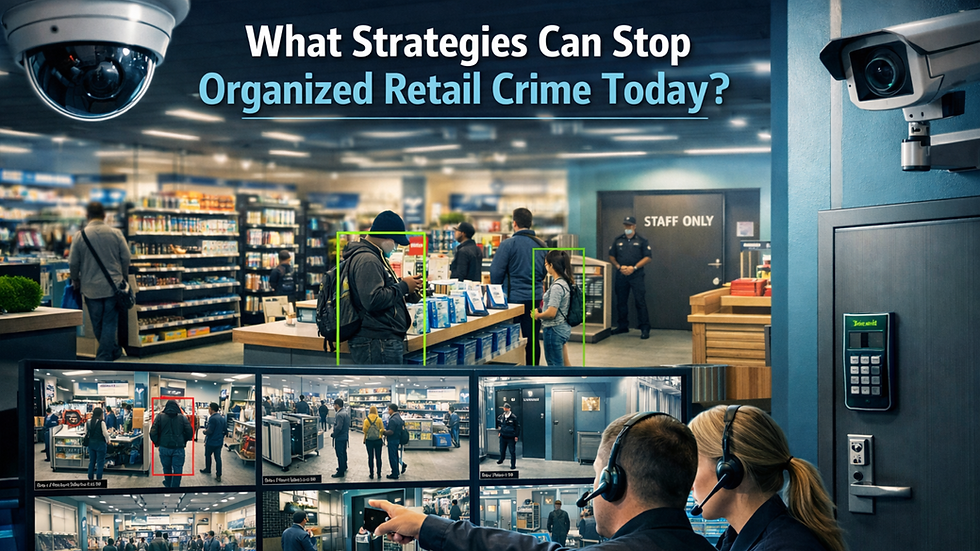
Have you noticed an increase in large-scale thefts targeting retail stores? Wondering why traditional security measures are no longer enough to stop these incidents? The answer lies in the rise of coordinated criminal networks.
Organized retail crime refers to professional groups systematically stealing merchandise in large quantities for resale. These groups use advanced tactics, planning, and technology, making them far more dangerous than individual shoplifters. Businesses must now adopt smarter, more proactive strategies to combat this growing threat effectively.
What Is Organized Retail Crime and How Does It Work?
This type of crime involves coordinated teams working together to steal goods from multiple locations. Unlike random theft, it is planned and executed with precision.
How It Typically Works:
Teams identify high-value targets
Members are assigned specific roles (lookouts, distractors, thieves)
Stolen goods are quickly moved and resold
Operations are repeated across multiple stores
Common Targets:
Electronics and gadgets
Branded clothing
Cosmetics and pharmaceuticals
This structured approach makes it difficult for retailers to detect and prevent losses.
Why Is It So Difficult to Control?

Modern criminal groups are becoming more sophisticated, using both physical and digital tactics.
Key Challenges:
Coordinated group activities
Use of technology to avoid detection
Fast movement of stolen goods
Limited staff intervention due to safety concerns
In some cases, tactics like a tailgating attack are used to gain unauthorized access to restricted areas such as stockrooms, making theft even easier and harder to track.
What Strategies Can Help Prevent It?
Retailers must move beyond traditional security measures and adopt a layered approach.
1. Advanced Surveillance Systems
Use AI-powered cameras and video analytics to monitor suspicious behavior in real time.
2. Access Control Measures
Restrict entry to sensitive areas like storage rooms and employee-only zones.
3. Employee Training
Train staff to पहचान suspicious behavior and respond safely without confrontation.
4. Inventory Management
Use smart tracking systems to monitor stock levels and detect unusual patterns.
5. Collaboration with Law Enforcement
Work closely with authorities to share data and identify repeat offenders.
How Does Technology Play a Role?

Technology is a critical tool in fighting modern retail crime.
Key Technologies:
AI Surveillance: Detects unusual patterns and behaviors
Facial Recognition: Identifies repeat offenders
Data Analytics: Provides insights into theft trends
Real-Time Alerts: Enables quick response to incidents
These tools help retailers shift from reactive to proactive security strategies.
Why Is Risk Assessment Important?
Before implementing any security solution, businesses must understand their vulnerabilities.
A proper risk assesment helps identify weak points, high-risk areas, and potential threats within a retail environment. This ensures that security measures are targeted and effective rather than generic and inefficient.
Benefits of Risk Assessment:
Identifies security gaps
Helps allocate resources effectively
Improves overall safety strategy
Reduces financial losses
By understanding risks, retailers can make informed decisions and strengthen their defenses.
What Are the Long-Term Solutions?
Stopping retail crime requires continuous improvement and adaptation.
Long-Term Strategies:
Invest in smart security infrastructure
Regularly update security policies
Use data to predict and prevent incidents
Build a culture of awareness among employees
These steps ensure sustained protection against evolving threats.
Conclusion: Can Organized Retail Crime Be Stopped?
Organized retail crime is a serious and growing challenge, but it is not impossible to control. With the right combination of technology, training, and strategic planning, retailers can significantly reduce risks and protect their assets. Proactive measures and continuous improvement are key to staying ahead of organized criminal networks.
FAQ Section
1. What is organized retail crime?
It is a coordinated effort by groups to steal large quantities of goods for resale.
2. How is it different from shoplifting?
Unlike individual theft, it involves organized teams and planned operations.
3. Can technology help prevent it?
Yes, AI surveillance and analytics play a major role in detection and prevention.
4. Why is it increasing?
High resale value and organized networks make it a profitable activity.
5. What is the first step to prevent it?
Conducting a proper risk assessment to identify vulnerabilities.


Comments