Intelligent Video Analytics: How Machines Turn Visual Data Into Actionable Insight


Have you ever wondered how modern surveillance systems seem to “understand” what they are watching instead of simply recording it? The answer lies in a technology that goes far beyond traditional cameras. Intelligent video analytics enables machines to interpret visual data in real time, identify meaningful events, and support faster, more accurate decision-making. In simple terms, it transforms raw video footage into usable intelligence, reducing human effort while improving situational awareness.
At its core, this technology answers a clear user intent: it helps organizations detect, analyze, and respond to events automatically rather than reviewing hours of footage after something has already gone wrong.
What Is Intelligent Video Analytics and Why Does It Matter?
Video analytics refers to the automated processing of video streams to extract meaningful information. Unlike conventional CCTV systems that only capture and store visuals, advanced analytics systems actively analyze movement, behavior, and patterns as they occur. This shift from passive recording to active interpretation is what makes the technology valuable.
The importance lies in speed and accuracy. Humans can miss subtle details when monitoring multiple screens for long hours. Machines, however, can continuously scan video feeds without fatigue, flagging unusual activity the moment it happens. This capability is especially critical in environments where response time directly impacts safety, efficiency, or revenue.
How Intelligent Video Analytics Works Behind the Scenes?

Video forensics plays a critical role in how modern video analytics systems extract meaning from visual evidence. These systems combine computer vision, machine learning, and artificial intelligence to move beyond simple recording and basic motion alerts. Cameras capture raw video data, which is then analyzed by advanced algorithms trained to recognize objects, behaviors, and contextual patterns within a scene.Rather than reacting to movement alone, video forensics focuses on understanding intent and sequence. For instance, the system can differentiate between a person walking through an area and someone loitering near a restricted zone, based on behavior, timing, and spatial context. This deeper interpretation allows investigators and operators to reconstruct events accurately and identify anomalies that would otherwise go unnoticed.As more data is processed, machine learning models continuously refine their accuracy. They adapt to changing environments, varying lighting conditions, and different camera angles, improving reliability over time. This ability to learn and evolve makes video forensics increasingly effective for investigations, compliance, and post-incident analysis as system usage expands.
Key Capabilities That Set It Apart from Traditional Surveillance
Traditional surveillance systems depend heavily on human monitoring and post-incident investigation. Advanced analytics, on the other hand, provide proactive intelligence. They can detect unauthorized access, identify abandoned objects, recognize faces or license plates, and even analyze crowd density.
Another defining capability is contextual awareness. Instead of triggering alerts for every movement, the system understands context and prioritizes events that truly matter. This reduces false alarms and allows security teams to focus on high-risk situations rather than routine activity.
Real-World Applications Across Industries
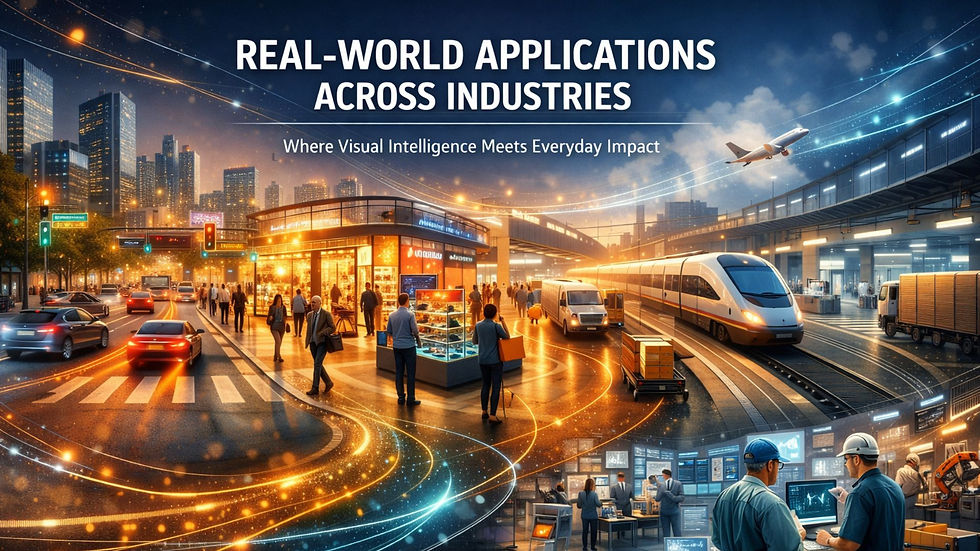
The use cases for intelligent video analytics span far beyond security. In retail environments, it helps analyze customer behavior, optimize store layouts, and reduce theft. In transportation hubs, it supports traffic flow management and enhances passenger safety. Manufacturing facilities use it to monitor operational efficiency and ensure compliance with safety protocols.
Smart cities also benefit significantly. Traffic congestion, public safety incidents, and infrastructure monitoring can all be managed more effectively when visual data is analyzed in real time. Healthcare facilities use similar systems to monitor patient movement and prevent accidents without invading privacy.
Benefits That Drive Adoption
One of the most compelling advantages is operational efficiency. Automated analysis reduces the need for constant human supervision, lowering costs while increasing accuracy. Real-time alerts enable faster response, which can prevent minor issues from escalating into major incidents.
Another benefit is scalability. As camera networks grow, human monitoring becomes impractical. Analytics systems scale easily, handling thousands of video feeds simultaneously without a drop in performance. Over time, the insights generated also support better strategic planning and resource allocation.
Challenges and Ethical Considerations
Despite its growing advantages, Video Analytics raises several important ethical and operational concerns that organizations must address responsibly. Data privacy remains one of the most critical issues, especially when systems involve facial recognition, behavioral analysis, or long-term data storage. To build trust and avoid misuse, organizations must comply with local and international regulations while adopting transparent data governance and responsible usage policies.Alongside ethical concerns, technical challenges can impact system performance. Factors such as poor camera placement, low-resolution footage, inconsistent lighting, or biased training data can reduce accuracy and reliability. Overcoming these limitations requires thoughtful system design, regular model updates, and continuous evaluation to ensure results remain fair, unbiased, and dependable. Addressing both ethical and technical challenges is essential for sustainable and trustworthy adoption of Video Analytics across real-world environments.
The Future of Visual Intelligence

As artificial intelligence continues to evolve, video analytics systems will become even more intuitive. Future developments are expected to focus on deeper contextual understanding, predictive analysis, and seamless integration with other digital systems. Rather than simply reacting to events, these systems will anticipate risks and recommend actions before incidents occur.
This evolution positions visual intelligence as a foundational element of smarter, safer, and more efficient environments across both public and private sectors.
Summary
Intelligent Video Analytics has transformed modern video analysis systems far beyond passive recording. Today’s solutions actively interpret visual data in real time, identify meaningful patterns, and enable faster, smarter decision-making across industries. By combining artificial intelligence, machine learning, and computer vision, these systems significantly reduce human workload while improving accuracy and consistency. Instead of relying on reactive investigations after incidents occur, organizations can take proactive action as events unfold. From enhancing safety and operational efficiency to delivering actionable, data-driven insights, visual intelligence has become a critical tool for organizations seeking clarity, control, and confidence in increasingly complex environments.
Frequently Asked Questions (FAQs)
1. How accurate are advanced video analysis systems?
Accuracy depends on factors such as camera quality, system configuration, and training data. When properly implemented, these systems achieve high reliability and continue to improve over time through machine learning.
2. Can video analytics work in low-light or crowded environments?
Yes. Modern systems are designed to handle challenging conditions like poor lighting, weather changes, and dense crowds by adapting to environmental variations.
3. Is this technology suitable for small businesses?
Absolutely. Scalable solutions allow small and medium-sized businesses to adopt video analysis without large infrastructure investments, making it accessible beyond large enterprises.
4. How does video analytics impact privacy?
Privacy concerns are addressed through features like data anonymization, access controls, and compliance with local regulations. Responsible deployment focuses on transparency and ethical use.
5. What skills are needed to manage such systems?
Most platforms are designed for ease of use and do not require advanced technical expertise. Basic training is usually sufficient, while system providers handle updates and optimization.


Comments