How VMS Software Improves Video Surveillance and Monitoring


If you manage a commercial space, campus, or multi-location business, you’ve likely asked this question: How do I monitor everything without constantly watching screens or missing critical events?
The short answer is simple—modern video management systems turn raw footage into actionable intelligence. Instead of passively recording video, today’s solutions actively organize, analyze, and surface what actually matters.
At a high level, VMS software acts as the central brain of a surveillance setup. It connects cameras, stores footage securely, enables live monitoring, and helps teams quickly search, analyze, and respond to incidents—often in real time.
What Is a Video Management System and How Does It Work?
A Video Management System (VMS) is software designed to manage video feeds from multiple cameras in one centralized platform. It records, stores, retrieves, and analyzes video data while allowing operators to control cameras remotely.
Most systems follow this flow:
Cameras capture live video streams
Video is transmitted to local or cloud servers
Footage is stored securely with time and event indexing
Users access live views, recordings, and analytics through a dashboard
This structure reduces manual oversight while improving response accuracy.
Why Businesses Are Moving Beyond Traditional Surveillance
Legacy CCTV systems were built for recording—not insight. Reviewing footage meant scrubbing through hours of video after an incident occurred.
Modern businesses need more than passive monitoring. They need:
Faster incident detection
Centralized visibility across locations
Smart alerts instead of constant screen watching
Scalable systems that grow with operations
This shift is where VMS software becomes essential.
How Intelligent Video Management Improves Monitoring Efficiency
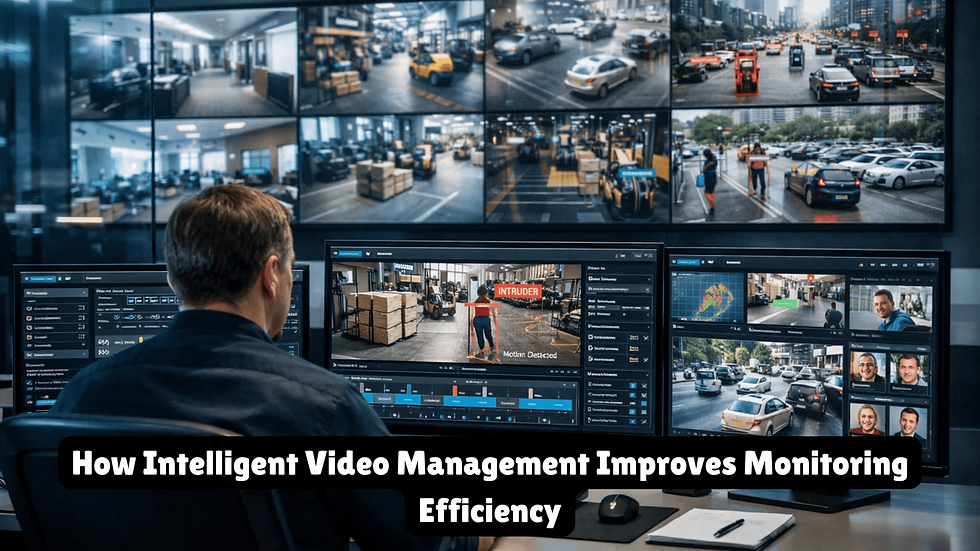
Centralized Control Across Locations
One dashboard can manage hundreds of cameras across offices, warehouses, retail stores, or campuses. Operators no longer need separate systems for each site.
Faster Search and Incident Review
Advanced indexing allows teams to search by time, motion, or event type—cutting investigation time dramatically.
Smarter Alerts Instead of Manual Monitoring
Rather than watching screens all day, teams receive alerts when something unusual happens, such as unauthorized access or abnormal movement.
The Role of Face Recognition in Smarter Surveillance
When paired with Face Recognition, video systems move from observation to identification. This technology allows businesses to:
Identify authorized vs unauthorized individuals
Track repeat visitors or known threats
Improve access control in restricted areas
Used responsibly, this capability increases security without increasing staffing costs.
AI Video Surveillance: Turning Footage Into Insights
Roughly 300+ words later in the workflow, intelligent analytics become the real differentiator.
With ai video surveillance, systems can detect patterns humans would miss, such as:
Suspicious loitering behavior
Abandoned objects in sensitive areas
Crowd density changes
Unusual movement patterns during off-hours
Instead of reacting after incidents, businesses can act proactively.
Key Benefits for Business Operations

Beyond security, video management platforms add operational value:
Reduced theft and shrinkage
Improved employee and visitor safety
Faster compliance reporting
Better use of security staff time
Scalable monitoring as locations expand
This makes video management a business intelligence tool—not just a security expense.
How to Choose the Right Video Management System
When evaluating options, focus on:
Compatibility with existing cameras
Scalability for future growth
AI and analytics capabilities
Ease of use for operators
Data security and compliance
The best systems balance power with simplicity.
Summary
VMS software helps businesses move beyond basic video recording by centralizing camera control, improving monitoring efficiency, and enabling faster incident response. With smart alerts, advanced search, and AI-powered insights, it transforms surveillance footage into actionable intelligence, making security operations more proactive, scalable, and effective for modern organizations.
FAQs
Is video management only for large enterprises?
No. Scalable systems now support small businesses, retail chains, and campuses.
Does AI replace human security teams?
No. AI supports faster decisions; humans remain in control.
Is cloud-based video management secure?
Yes, when encryption, access controls, and compliance standards are properly implemented.
Comments