How Advanced Is Motion Detection Technology Now?


Have you ever wondered how security systems instantly detect unusual activity and alert you in seconds? Or how cameras can now “understand” movement instead of just recording it? The answer lies in the evolution of intelligent monitoring systems.
Motion detection is a technology that identifies movement within a monitored area and triggers automated responses such as alerts, recordings, or alarms. Today’s systems go far beyond basic sensing they analyze behavior, reduce false alarms, and provide actionable insights. This makes them a critical component of modern security solutions for homes, businesses, and public spaces.
What Is Motion Detection and How Does It Work?
At its core, this technology uses sensors or video analytics to detect changes in an environment.
How It Works:
Sensors or cameras monitor a defined area
Movement is detected through changes in pixels or infrared signals
The system processes the activity using algorithms
Alerts or actions are triggered instantly
Types of Detection:
Passive Infrared (PIR): Detects heat changes
Video-Based Detection: Uses cameras and software
Microwave Sensors: Detects movement through waves
These methods ensure accurate and reliable monitoring across different environments.
Why Is It Essential in Modern Security?
Security today demands proactive solutions. Instead of reacting after an incident, systems must detect and respond instantly.
Key Benefits:
Immediate alerts for suspicious activity
Reduced reliance on manual monitoring
Enhanced safety for people and property
Improved incident response time
With real time threat detection, systems can identify risks as they occur, allowing users to act before situations escalate.
What Features Make It More Advanced Today?
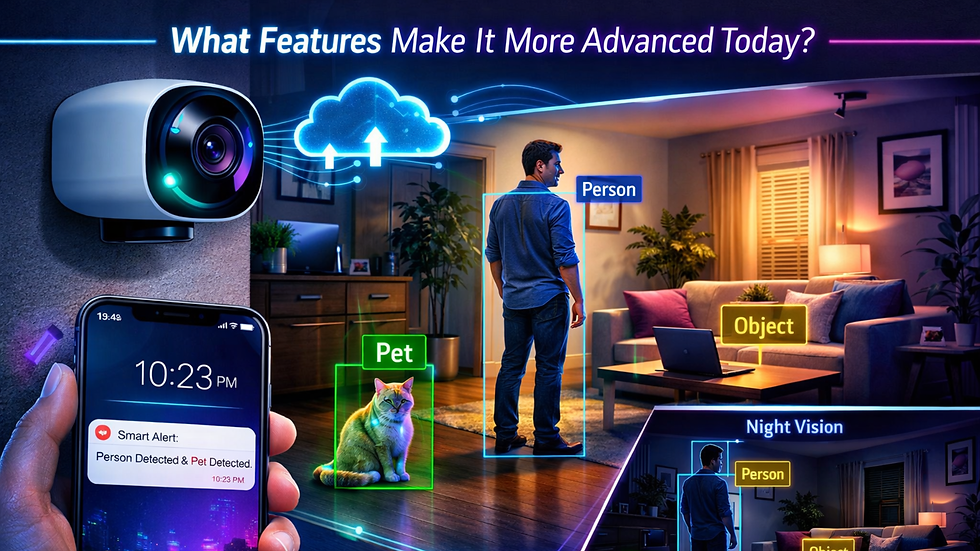
Technological advancements have significantly improved the efficiency and accuracy of these systems.
Advanced Features:
AI Integration: Differentiates between humans, animals, and objects
Smart Alerts: Sends notifications only when necessary
Cloud Connectivity: Enables remote access and storage
Low-Light Performance: Works effectively at night
Key Improvements:
Fewer false alarms caused by shadows or weather
Faster processing and response times
Better adaptability to different environments
These enhancements make modern systems more reliable and user-friendly.
How Does It Improve Monitoring Efficiency?
Efficiency is a major advantage of modern surveillance systems.
Efficiency Gains:
Continuous 24/7 monitoring without fatigue
Automated alerts reduce manual effort
Data-driven insights improve decision-making
Faster response to incidents
These capabilities allow businesses and homeowners to maintain high levels of security with minimal effort.
What Are the Key Use Cases?

This technology is widely used across various industries due to its versatility.
Common Applications:
Home Security: Protects against intrusions
Retail Stores: Prevents theft and monitors activity
Offices: Secures restricted areas
Public Spaces: Enhances crowd safety
In advanced setups, features like Line cross Detection help monitor boundaries by triggering alerts when someone crosses a predefined line, adding another layer of protection.
What Should You Consider Before Choosing a System?
Selecting the right solution depends on your specific needs.
Important Factors:
Coverage area and camera placement
Sensitivity and customization options
Integration with existing systems
Data storage and accessibility
Careful planning ensures optimal performance and long-term reliability.
Conclusion: Is It Worth the Upgrade?
Motion detection technology has evolved into a smart, efficient, and essential security tool. Its ability to detect movement, analyze behavior, and trigger instant responses makes it invaluable in today’s fast-paced world. As systems continue to improve, they will play an even greater role in creating safer and more secure environments.
FAQ Section
1. How accurate is modern motion detection?
Modern systems are highly accurate due to AI and advanced algorithms that reduce false alarms.
2. Can it work in the dark?
Yes, most systems include infrared or low-light capabilities for night monitoring.
3. Does it require internet access?
Internet enhances features like remote access, but basic functions can work locally.
4. Can it detect all types of movement?
It can detect most movements, but accuracy depends on system quality and settings.
5. Is it suitable for small homes?
Absolutely, it is scalable and works well for both small and large spaces.


Comments